Special Sessions
Special Session: Power System Optimal Dispatch and Power-Energy Balance for Renewable Energy Accommodation Enhancement
The global energy transition is accelerating the integration of high-penetration renewable energy into power systems. However, the stochastic, volatile, and intermittent nature of renewable generation poses unprecedented challenges to power system optimal dispatch and power-energy balance. This forum focuses on the core theme of "Power System Optimal Dispatch and Power-Energy Balance for Renewable Energy Accommodation Enhancement", aiming to bring together leading researchers and engineers worldwide. It will explore multi-timescale optimal dispatch theories under high renewable penetration, coordinated control strategies for source-grid-load-storage integration, power-energy balance analysis methodologies, flexibility resource exploitation and market mechanism design, as well as innovative applications of artificial intelligence and digitalization in dispatch operations. Covering the full spectrum from theoretical methods to engineering practices, this forum provides a premier academic platform for building secure, efficient, and low-carbon modern power systems..
Conventional power system dispatch has primarily revolved around controllable thermal and hydro generation. In contrast, high-renewable-penetration scenarios introduce fundamentally new dimensions—deep coupling of source-grid-load-storage, multi-energy complementarity, and coordinated market mechanisms—that transcend the scope of traditional conference sessions. The novelty of this special session lies in three aspects: (1) Interdisciplinary fusion—integrating operations research, artificial intelligence, market economics, and power system engineering; (2) Full-chain coverage—bridging long-term planning, medium-term trading, short-term dispatch, and real-time control across complete temporal scales; (3) Problem-driven orientation—directly addressing the globally urgent challenge of renewable energy accommodation rather than incremental algorithmic improvements. Regular conference programs typically disperse dispatch, planning, market, and storage topics into separate sessions, hindering systematic academic exchange. By consolidating these interconnected domains, this forum fosters cross-disciplinary intellectual synergy and catalyzes the paradigm shift from "passively adapting to renewables" to "proactively accommodating renewables".
Related Topics for this Session (but not limited to):
I. Theories and Methodologies for Optimal Dispatch of Power Systems with High Penetration of Renewable Energy
- Security-Constrained Unit Commitment (SCUC) and Security-Constrained Economic Dispatch (SCED) with high penetration of renewable energy integration
- Optimization dispatch models and algorithms for coordinated multi-resource of generation-grid-load-energy storage
- Coordinated optimal dispatch strategies across multiple time scales (day-ahead, intra-day and real-time)
- Robust optimization, stochastic optimization and distributionally robust optimization dispatch accounting for uncertainty and volatility of renewable generation
- Intelligent optimal dispatch approaches combining data-driven methods and physical models
- Grid topology reconfiguration and optimal operation under large-scale grid-integrated renewable energy
II. Power and Energy Balance Analysis and Power System Planning
- Long-, medium- and short-term power-energy balance analytical approaches under high-renewable-penetration scenarios
- Impacts of extreme weather and seasonal characteristics of renewable output on power and energy balance
- Cross-regional and inter-provincial power transmission as well as wide-area mutual aid balancing mechanism of power and energy
- Matching evaluation between installed renewable capacity and system balancing capability
- Optimized green power-energy balance with carbon emission constraints incorporated
- Energy balance and dispatch coordination for hybrid multi-energy complementary systems consisting of hydropower, wind, PV, thermal power and nuclear power
III. Exploration and Dispatch of Flexible Resources
- Optimal configuration and dispatch strategies of various energy storage systems (electrochemical storage, pumped hydro storage, compressed air energy storage, etc.)
- Aggregation and regulation of demand response, virtual power plants and dispatchable flexible loads
- Support of EV-to-Grid (V2G) and vehicle-grid interaction for renewable energy accommodation
- Flexibility retrofitting and deep peak-shaving optimization of conventional coal-fired and gas-fired power units
- Coupled dispatch and electricity-hydrogen coordinated balance between hydrogen systems and power grids
IV. Digital and Intelligent Technical Supports
- Applications of artificial intelligence (deep learning, reinforcement learning) in renewable power forecasting and dispatch decision-making
- Digital twin technology and cloud-edge collaborative dispatch techniques
- Online assessment and early warning of renewable accommodation capability based on big data analytics
- Intelligent upgrading of automatic dispatch systems (EMS/AGC)
- Secure and efficient dispatch under Cyber-Physical Systems (CPS)
Organizers:
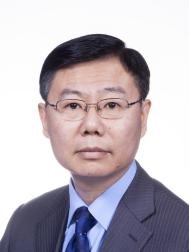
Prof. Pei Zhang, Tianjin University, China
Pei Zhang Distinguished Professor at Tianjin University. He previously served as Vice Dean of the International School of New Energy, Beijing Jiaotong University, Director of Smart Grid at Accenture Resources Business Unit, and Division Director of Power System Operation and Planning at the Electric Power Research Institute (EPRI), USA. He earned his PhD from Imperial College London. His research interests cover power system dispatch and operation, power system planning, electricity market and power system informatization. He has authored four monographs and published more than 300 academic papers. He was elected an IEEE Fellow for his contributions to computational methodologies for intelligent control centers as well as probabilistic power system planning and operation. He was also conferred Fellowship of the Asia-Pacific Artificial Intelligence Association for his outstanding achievements in artificial intelligence applications within power systems. In addition, he has been listed in the Lifetime Scientific Impact Ranking of the World’s Top 2% Scientists.
Submit Method:
1, submit it via the link: http://www.easychair.org/conferences/?conf=repe2026 (after entering the link, click on the corresponding topic) before the submission deadline
2, send your manuscript to repe_conf@126.com with subject "Submit+Special Session-9+Paper Title". (请通过邮件发送稿件,邮件题目:Submit+Special Session-9+Paper Title)
Copyright © REPE 2018-2026. All rights reserved.